Daikoku PA Without a Tour: Taxi, Rental & Why People Get Stranded
Yes, you can visit Daikoku PA without a tour, but only with a car of your own. There is no train station, no bus stop, and walking or cycling in is prohibited, since the parking area sits inside a closed loop of the Shuto expressway. That single fact decides almost everything else on this page: a rental car or a taxi both work getting in, and both come with a real risk of getting stuck once you're there. I've made this trip both ways, self-driven and by taxi, and the honest breakdown below covers what each route actually costs, as of August 2026.
Quick answer
Daikoku PA without a tour is possible only by car, since there's no train, bus, or pedestrian access into the expressway loop it sits inside. A taxi one-way from central Tokyo runs about ¥8,000 to ¥15,000, and the real risk isn't getting there, it's getting back, since there's no taxi stand inside the PA and drivers rarely wait.
Key takeaways
- No train, no bus, no walking in; a car is the only legal way to arrive
- One-way taxi from central Tokyo costs roughly ¥8,000–15,000; from Yokohama Station, ¥3,000–5,000
- The cheapest shared seat on a guided tour starts at $54, close to a round-trip taxi for one person
- There's no taxi stand at Daikoku, so drivers rarely wait and calling a pickup onto a closed toll road is genuinely hard
- Shuto Expressway tolls run ¥300–1,950 with ETC; cash pays the flat ¥1,950 maximum
- Rates change starting October 2026, so double-check current tolls close to your date
- Every parking area on the route sits behind toll gates; the night-run route map shows what a guided ride covers
Why There Is No Walk-In
Daikoku PA sits on Daikoku Futo island in Tsurumi-ku, Yokohama, built into a looping junction of the Bayshore Route inside the Shuto expressway network. It functions as a working rest stop for a closed high-speed road, not a public plaza, which is why there's no train station nearby, no city bus route that stops there, and no sidewalk leading in. Police have specifically cracked down on tourists sneaking in on foot in recent years, since walking or cycling onto an expressway shoulder is both illegal and genuinely dangerous with trucks and tuned cars moving at speed.
The only legal ways in are a private or rented car via the expressway itself, a taxi, or a guided tour that drives you in directly. For guided rides into the Daikoku meet that handle this logistics problem for you, the homepage lineup runs from shared budget seats to private convoys, and tours typically meet near Yokohama Station, about 30 minutes by train from central Tokyo, or pick up directly in Shibuya.
Every Way In, Compared
Four real ways exist to reach Daikoku PA. Here's how they stack up on cost, flexibility, and the one thing each option handles worst.
| Option | Cost per person | Flexibility | Best for | Weak point |
|---|---|---|---|---|
| Guided tour | $54–$427 | Fixed schedule, driver handles logistics | No car, one shot at it, don't want the return-trip risk | You don't set your own pace |
| Taxi | ~¥8,000–35,000 round trip | Flexible timing, expensive to keep waiting | Solo or pair travelers without a car | No taxi stand inside; getting back is genuinely hard |
| Rental car | Toll ¥300–1,950 each way + rental fee | Full control of timing and route | Groups with a valid license or IDP | Requires an International Driving Permit and confidence on the expressway |
| Rideshare/private driver | Similar to taxi, sometimes pre-bookable | Depends on the app's Tokyo coverage | Travelers wanting a pre-arranged pickup time | Coverage and pickup at Daikoku itself is inconsistent |
A rental car is the cheapest per-trip option once you're past the deposit and insurance, since the toll is a few dollars each way. A tour is the most expensive per person up front, but it's the only option that also solves the return trip, which is the part that actually strands people.
The Taxi Trap
Getting a taxi to Daikoku PA is the easy half of the trip. From central Tokyo, expect roughly ¥8,000 to ¥15,000 one-way depending on traffic and exact starting point; from Yokohama Station it's closer to ¥3,000 to 5,000, and from Haneda Airport, ¥5,000 to 9,000. Any taxi app or a hotel concierge can book that leg without trouble.
- There is no taxi stand inside Daikoku PA, so a driver who drops you off has no obvious place to wait
- Most drivers won't sit idle for 60 to 90 minutes on a meter that isn't running fares elsewhere
- Calling a new taxi to pick you up on a section of closed toll road is logistically awkward, and many taxi companies simply refuse the job
- The realistic fallback if your ride doesn't show is waiting until morning traffic returns, which is exactly the scenario that has genuinely stranded tourists overnight
If you do want a round trip by taxi, the honest number is a wait-and-return fare of roughly ¥20,000 to ¥35,000 from central Tokyo, including the driver's waiting fee for one to two hours on site. That's close to or above what a private tour costs, without any of the guaranteed pickup. A handful of visitors get around this by asking the driver to circle nearby streets rather than sit stationary, but that only shifts the cost, it doesn't remove the risk that the driver simply moves on to another fare while you're inside the PA.
Self-Drive: Tolls and What ETC Changes
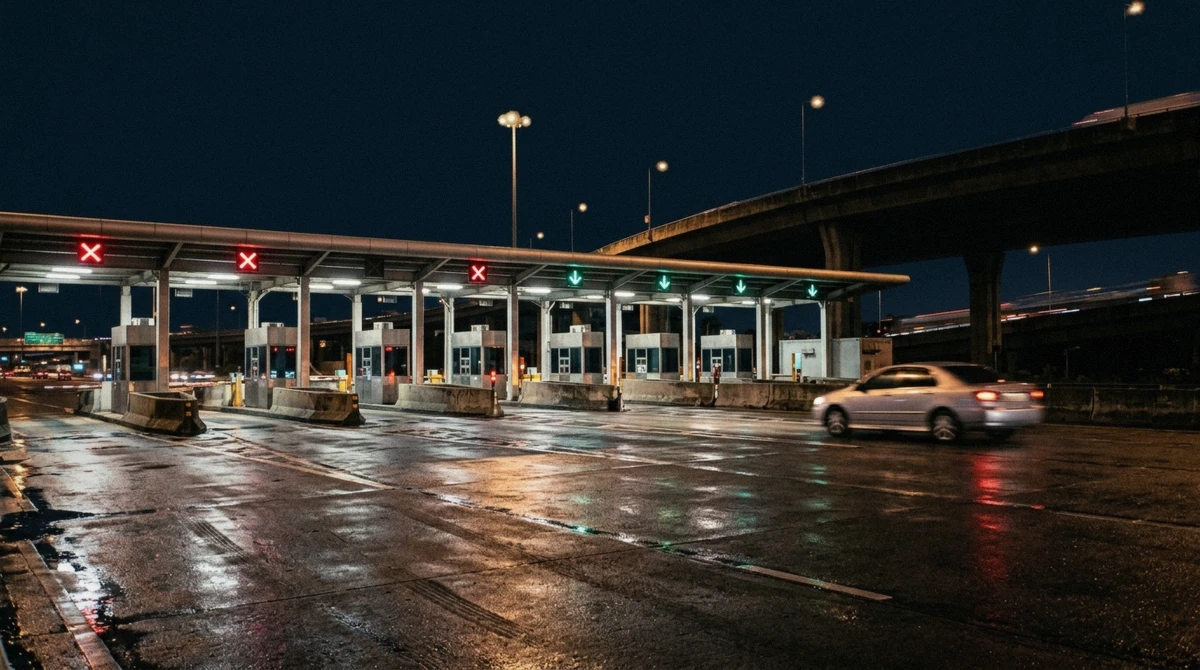
The Shuto Expressway charges a distance-based toll with ETC, running roughly ¥300 to ¥1,950 for a passenger car depending on how far you travel on it. Pay cash instead and you're charged the flat maximum of ¥1,950, since cash lanes can't calculate the distance discount. Many gates on the network are now ETC-only, marked with a purple sign, while green signs still take cash; know which gate you're approaching before you're in the lane, since a wrong lane on an expressway isn't something you can casually reverse out of.
- Toll rates are scheduled to change starting October 2026, so confirm the current figure close to your travel date on the official Shuto site
- Foreign license holders need an International Driving Permit under the 1949 Geneva convention, or an official Japanese translation of their home license
- Rental JDM performance cars exist in Tokyo, but expect a high deposit and steep insurance excess compared to a standard economy rental
- An ETC card is usually bundled with the rental; ask specifically, since a rental car without one forces you into cash-only lanes
- Fuel gauges and return-time policies vary by rental company, and returning a car late at night after a Daikoku run is common enough that it's worth confirming the counter's actual closing hours before you commit to the plan
Which Way In Fits You
If you have no car and this is a one-night stop in Tokyo
book the cheapest shared tour seat, it solves both legs at once
If you already have a rental car and a valid IDP
self-drive; the toll is a few dollars each way and you control the schedule
If you're traveling with three or more people
split a rental car; the per-person cost usually beats even the budget tour
If you only have a taxi option and no group to share it with
book the trip out by taxi but pre-arrange the return through your hotel or a tour, never assume you'll find one on-site
If you want the guaranteed manual JDM experience without the logistics
book a private convoy with hotel pickup instead of self-driving
The Access Map
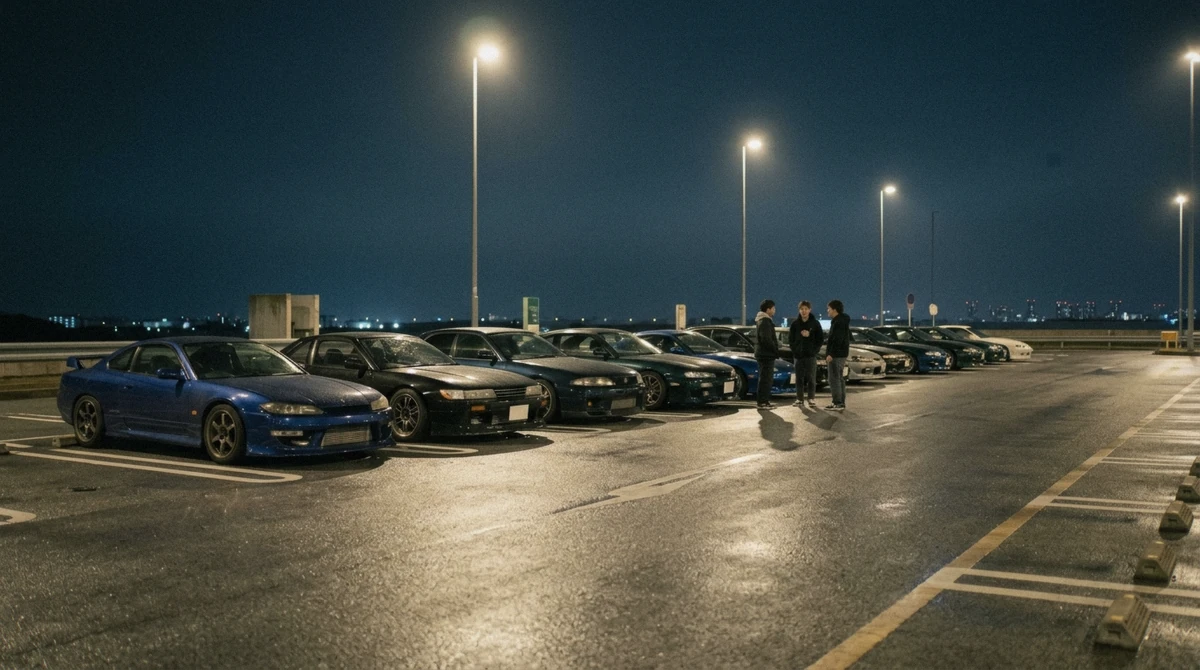
Daikoku PA sits inside the expressway loop, roughly 30 minutes from central Tokyo. These are the landmarks and pickup points that matter for a DIY trip.
What DIY Really Costs
The real out-of-pocket total for a self-drive trip is small once you already have a rental booked: the toll alone runs ¥300 to ¥1,950 each way with ETC, so a round trip rarely tops ¥4,000 in tolls. Add the rental car's daily rate and insurance, and for a solo traveler the total often lands close to a mid-tier tour anyway once the rental math is included. For a group of three or four sharing one rental car, DIY comes out well ahead, since the toll and rental fee split four ways easily undercuts even the cheapest shared seat per person.
| Group size | Toll (round trip) | Rental share | Realistic per-person total |
|---|---|---|---|
| Solo | ~¥4,000 | Full daily rate | Often close to a mid-tier tour |
| Pair | ~¥2,000 each | Half daily rate | Usually cheaper than two tour seats |
| Group of 3–4 | ~¥1,000–1,300 each | Quarter to third of daily rate | Clearly cheaper than DIY alone |
Taxi vs. Tour
Taxi
- Cheaper one-way, roughly ¥8,000–15,000 from central Tokyo
- No fixed schedule, leave whenever you're ready
- No help understanding tonight's closure pattern
- The return trip is a real, unsolved risk
Guided tour
- $54–$427 per person, covers the full round trip
- A driver who knows the current closure and backup-lot pattern
- Guaranteed transport back out, the taxi's weak point solved
- Fixed pickup time and route, less spontaneous
Verdict A taxi wins on price for the one-way leg. A tour wins on the leg that actually matters, getting back, which is why most solo and first-time visitors end up choosing it over a taxi gamble.
If You'd Rather Not Gamble the Return Trip
Both of these solve the getting-back problem a taxi can't.
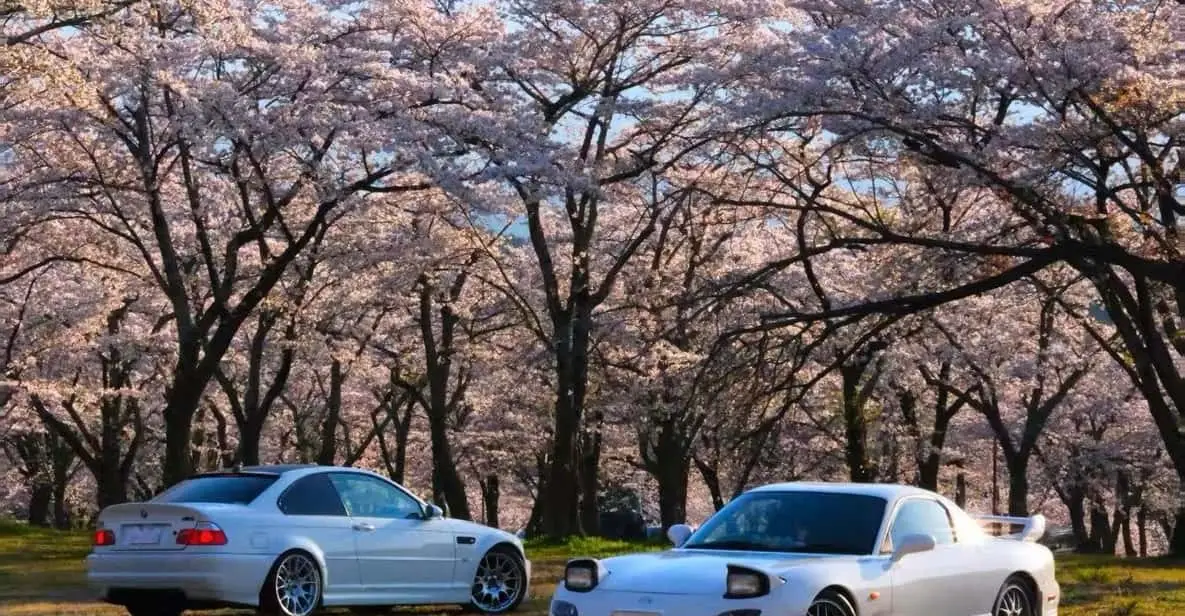 from $54Lowest Price
 Local Speed Tour to Daikoku PA in a JDM or Euro Build
Ride the Rainbow Bridge to Daikoku PA and the A-PIT store in a JDM icon such as an RX-7 or GT-R, or a European performance car. A professional…
- The most affordable Daikoku PA ride in our lineup
- Choose a JDM icon such as an RX-7 or GT-R, or a Euro performance car
- Cross the Rainbow Bridge and visit the A-PIT store
- Professional driver with strong English
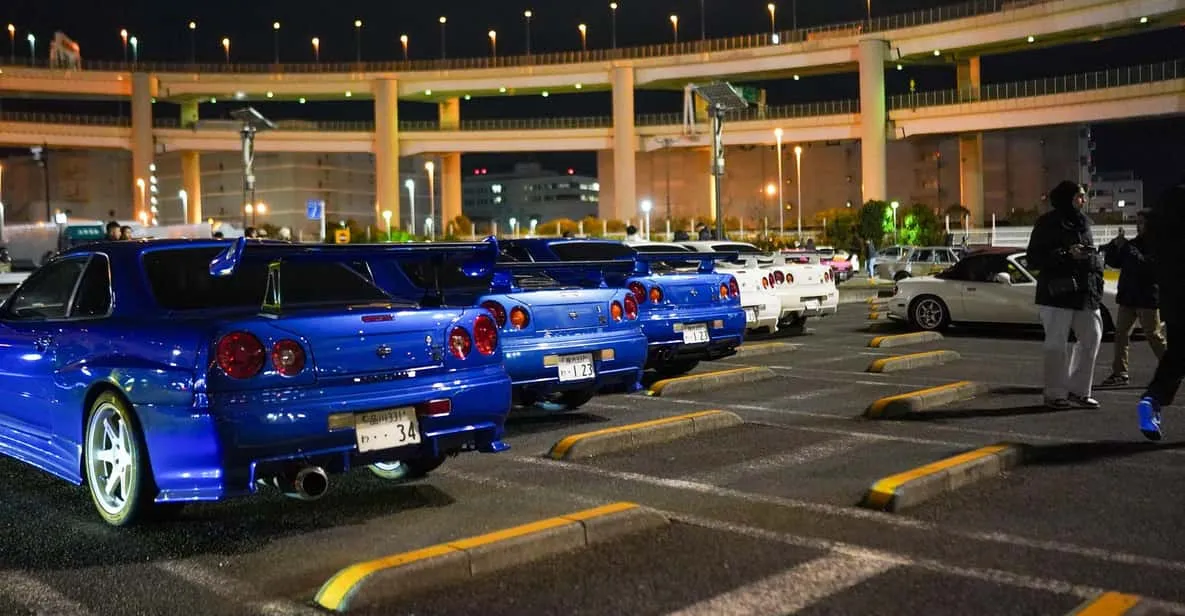 from $299GT-R Choice
 Nissan GT-R Experience: R32 to R35 at Daikoku PA
Cruise Tokyo in a modified Nissan GT-R, choosing between the R32, R33, R34, or R35 generation. The drive links Tatsumi PA, the Rainbow Bridge, Tokyo Tower, and the…
- Ride in a modified Nissan GT-R of your chosen generation
- Pick from the R32, R33, R34, or R35 Skyline GT-R
- Drive links Tatsumi PA, the Rainbow Bridge, and Tokyo Tower
- Finish at the Daikoku PA car meet
Getting There FAQ
Can you walk or take a train to Daikoku PA?
No. There's no train station or bus stop near Daikoku PA, and walking or cycling in is prohibited since it sits inside an active expressway loop. Police have specifically targeted pedestrians attempting to sneak in on foot.
How much is a taxi to Daikoku PA?
From central Tokyo, roughly ¥8,000 to 15,000 one-way. From Yokohama Station it's cheaper, about ¥3,000 to 5,000, and from Haneda Airport, ¥5,000 to 9,000.
Can you get a taxi back from Daikoku PA?
It's difficult. There's no taxi stand inside the PA, most drivers won't wait an hour or more, and calling a new pickup onto a section of closed toll road is complicated enough that many taxi companies decline the job outright.
How much are the expressway tolls to Daikoku PA?
With ETC, a passenger car pays a distance-based toll of roughly ¥300 to 1,950. Cash lanes charge the flat ¥1,950 maximum since they can't calculate the distance discount. Rates are scheduled to change starting October 2026.
Can tourists drive a rental car to Daikoku PA?
Yes, with a valid International Driving Permit or an official Japanese translation of a home license. Rental performance cars exist but carry high deposits and insurance excess; a standard economy rental with an ETC card is the simpler route.
Is a guided ride to Daikoku PA worth it instead?
For most visitors without their own car, yes, mainly because it solves the return trip. See the full worth-it breakdown for the complete cost comparison against DIY.
Is the Daikoku PA meet itself legal?
Spectating is legal and free, but the meet is unofficial and police can and do close the lot without notice. See is the meet legal for the full rules and current enforcement pattern.
The math on this page comes down to one honest tradeoff: DIY is cheaper if you already have a car and the paperwork to drive it, and a taxi is fine for the trip out but a real gamble for the trip back. If your group already has a rental and an IDP, the toll alone is a few dollars each way and the whole trip is yours to run at your own pace. If you don't, the cheapest shared seat on a guided ride costs close to a one-way taxi fare and removes the one part of this trip that has genuinely stranded people overnight, and options like the Nissan GT-R experience fold that same guaranteed return trip into a night built around one specific car.
Whichever way you go, don't leave the return trip to chance, since that's the detail every stranded-tourist story on this route has in common.