Is Daikoku PA Legal? Police, Closures & Meet Rules (2026)
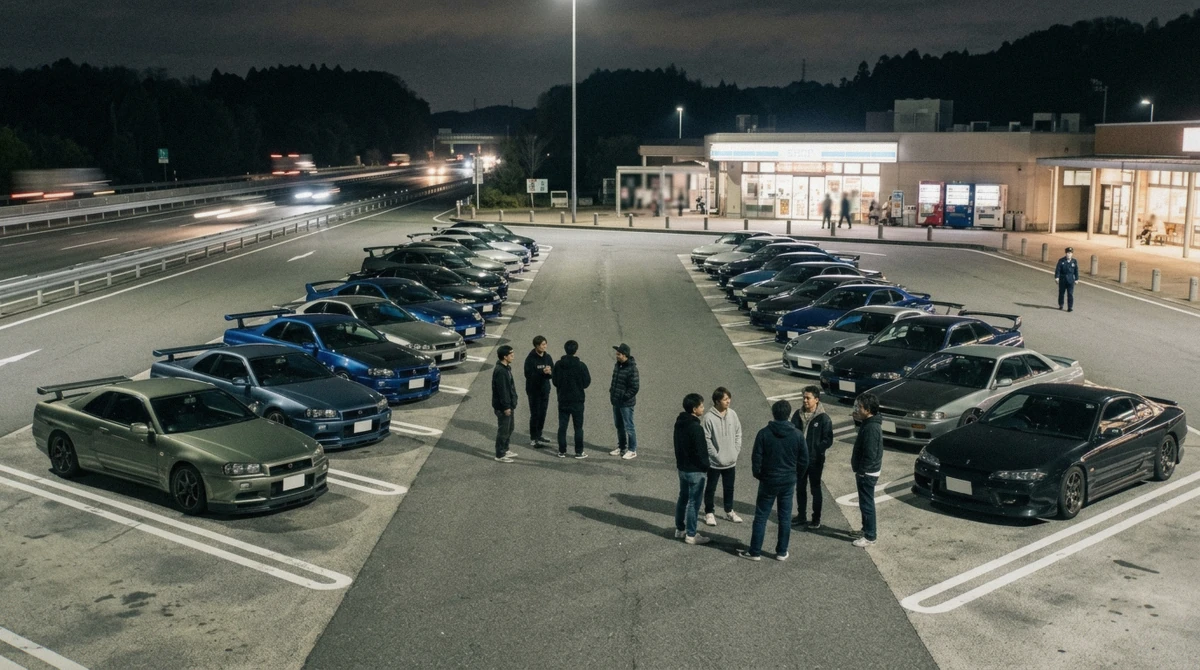
Is Daikoku PA legal? Yes, and it always has been. The Daikoku Parking Area is an ordinary Shuto Expressway rest stop that opened in 1989, and gathering there to look at cars breaks no law and costs nothing to do. What confuses people is the police activity that surrounds the meet: unannounced early closures on busy nights, a widely reported roadworthiness sweep that pulled dozens of cars over for inspection, and a real crackdown on modified vehicles that don't pass muster. None of that targets a visitor standing in the lot with a phone. Here is exactly what is legal, what actually draws police attention, and how a guided night keeps you clear of the part of the scene that carries genuine risk.
Quick answer
Daikoku PA is legal to visit any night of the week, free of charge, with no ticket or reservation required. The genuine risk sits with drivers of unlicensed or modified vehicles, not with visitors: police have run at least one on-site inspection sweep that stopped 53 cars and fined 43 for illegal modifications, and closures now sometimes start as early as 19:00 on the busiest Friday and Saturday nights.
Key takeaways
- Standing in the lot to look at cars is completely legal and free, no ticket, reservation or ID check.
- The documented risk sits with drivers, not visitors: one inspection sweep stopped 53 cars and fined 43 for illegal mods.
- Closures can start as early as 19:00 on peak Friday and Saturday nights, before the meet even builds; a guided street-team ride times arrival around that.
- Walking or cycling into Daikoku PA is prohibited and enforced; every legal way in involves a car, taxi or a chance to ride in with a guided night run.
- If the lot is closed on your night, tours reroute to Tatsumi or Umihotaru PA rather than turning around empty-handed.
Quick Answer for Your Situation
If You just want to watch and photograph
Completely legal and free, no permit needed
If You're driving your own modified car
Confirm your mods pass shaken roadworthiness standards before you go, since that is what police are actually checking
If You arrive after 19:00 on a Friday or Saturday
The lot may already be closed to new arrivals; a tour driver can pivot to Tatsumi or Umihotaru instead
If You're thinking about walking in from a nearby station
Don't; it's prohibited and actively enforced by police
A Legal Public Rest Stop, Not a Street Race
Daikoku PA opened in 1989 as an ordinary service area inside a looping junction of the Bayshore Route, the expressway everyone in the local scene calls the Wangan. It sits about 30 minutes from central Tokyo across the Rainbow Bridge, on reclaimed land in Yokohama's Tsurumi ward, and it is still, on paper, exactly what it looks like: a truck stop with a convenience store and toilets that never close. Nothing in Japanese law makes it illegal to park a car there, walk the rows, or stand and photograph what other people brought.
Entry to the lot itself is free; there is no gate, no entrance fee and no reservation, which is part of why the meet has run continuously since Japan's tuning boom of the late 1980s and early 1990s.
What Daikoku is not is a race. The illegal street racing that gave Japan's expressways their reputation, the touge mountain runs and the Wangan top-speed blasts, happens on the move, on public roads, and that is a separate offense from anything that happens once a car is parked. A parking area full of stationary, modified cars being looked at and photographed is a car show with public access, not a race, and police generally treat it that way.
Most of the confusion comes from movies and viral clips that show cars leaving Daikoku fast; what a visitor on a tour actually sees is a static meet.
Why Police Close It Anyway (Crowds, Noise and Trespassers)
If Daikoku is legal to visit, why does it sometimes get shut down before you arrive? The honest answer is crowd control, not the legality of spectating. As the meet has grown busier since 2025, Kanagawa and Tokyo police have started closing the parking area to new arrivals early on the busiest nights, sometimes from around 19:00 on a Friday or Saturday, hours before the deep-night crowd would normally build.
The closure isn't announced in advance and there's no posted schedule; police simply block the on-ramp once the lot reaches a capacity they're comfortable with, then reopen it later once numbers drop.
Trespassing is the other trigger, and it's a genuinely separate issue from the legality of the meet itself. Daikoku sits inside the expressway network with no train station, no bus stop and no pedestrian access, and walking or cycling in is prohibited. Police have specifically cracked down on tourists who try to sneak in on foot along the shoulder of the expressway, which is both dangerous and against the law in a way that simply driving in and parking is not. Reaching Daikoku without a tour covers exactly why that trap catches so many independent visitors and what the only legal ways in actually are.
A tour sidesteps both triggers: the car is already inside the lot when police start turning cars away, and nobody in the group is walking the shoulder of a closed expressway to get there.
The 2025-2026 Enforcement Wave
The clearest evidence that police take Daikoku seriously is a documented on-site inspection operation reported in the current enforcement wave: officers ran a spontaneous shaken, Japan's mandatory roadworthiness check, inside the parking area itself, stopping 53 modified sports cars and issuing fines to 43 of them for illegal modifications. That isn't a story about the meet being shut down; it's a story about individual cars failing a legal standard that has nothing to do with simply being present.
The mods that typically fail are the ones that change how a car performs or how visible it is on the road: exhaust noise over the legal limit, ride heights and wheel offsets that push tires outside the fender line, and lighting setups that aren't road-legal. None of that applies to a passenger in a tour vehicle, since the cars used for guided rides are maintained to pass inspection as a matter of keeping their operating licenses. Patrols have also added Shibaura PA to the regular watch list, and enforcement stepped up generally after a string of crackdowns on illegal street racing earlier in the year.
As of August 2026, the pattern has been steady rather than escalating: more visible patrol presence, occasional early closures, and periodic inspection sweeps aimed squarely at drivers, not spectators.
Etiquette at a Daikoku Meet: Do and Don't
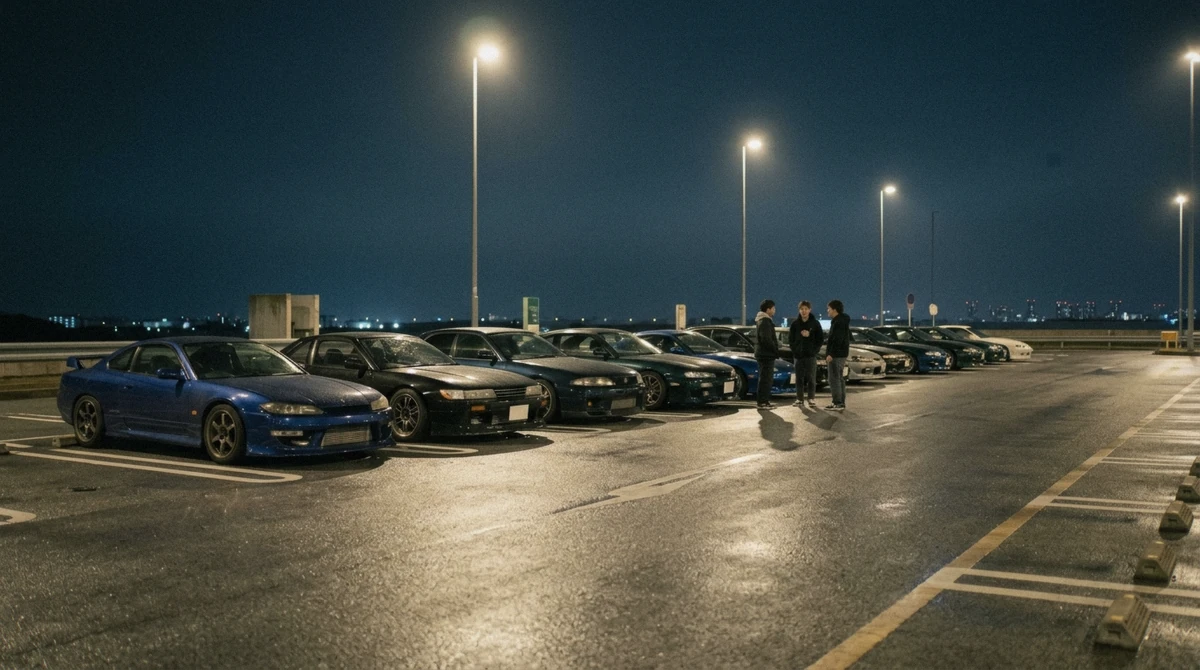
A meet with no gate and no organizer runs on unwritten rules instead. Following them is what keeps Daikoku open to visitors at all.
| Do | Don't |
|---|---|
| Ask before photographing a car up close or opening a door | Touch, lean on or sit inside a car without the owner's OK |
| Keep your voice down and stay near your own group | Rev an engine or blast music to draw attention |
| Park and walk normally through the rows | Drift, spin tires or speed through the lot |
| Leave promptly if police ask the lot to clear | Argue with an officer or block an exit lane |
| Use the A-PIT store or convenience store for the restroom | Litter or leave trash in the parking bays |
| Bring a Japanese-speaking guide or driver if you're on your own | Wander onto the expressway shoulder for a photo |
None of this is unique to Daikoku; it's standard car-meet etiquette anywhere enthusiasts gather informally. The one Daikoku-specific rule worth remembering is the last one: officers can and do ask a full lot to clear with little warning, and a calm, immediate exit is what keeps the meet tolerated rather than shut down for good.
If Daikoku Is Closed: Tatsumi, Umihotaru and Shibaura
A closed gate on your one night in Tokyo doesn't have to mean a wasted evening. When Daikoku fills up or police close it early, tours reroute rather than turn back, most often to one of three backup spots. Tatsumi PA, officially Tatsumi PA No. 1 and not the smaller No. 2 next to it, sits closer to central Tokyo on the Bayshore Route and draws a similar if slightly smaller crowd.
Umihotaru, the island rest stop on the Tokyo Bay Aqua-Line, is farther out but has its own following and bay views that Daikoku doesn't offer. Shibaura PA, newer to the rotation and now on the same police patrol list as Daikoku, fills in on nights when both of the others are also busy.
| Backup spot | How it compares to Daikoku |
|---|---|
| Tatsumi PA (No. 1) | Closer to central Tokyo, a similar if slightly smaller crowd |
| Umihotaru PA | Farther out on the Aqua-Line, dramatic bay views |
| Shibaura PA | Newest to the rotation, now on the same patrol list as Daikoku |
None of these is a consolation prize; all three are legal, free, public rest stops that host the same kind of static meet Daikoku does, and drivers who split their time across all four spots on a given weekend are common in the scene. A driver who knows the current status of each lot in real time, which is what a guided tour provides, gets you to wherever the cars actually are that night instead of leaving you stuck outside a closed gate with no plan B.
How Tours Keep It Legal and Low-Risk
A tour removes both categories of risk described above. Your car and driver are inspected, licensed and already used to nightly changes in police presence, so you're not gambling on whether your own modifications would pass a roadside check. For something more private, a private JDM tour with hotel pickup collects you directly and lets your driver decide in real time whether Daikoku, Tatsumi or Umihotaru is the better bet that night.
If you'd rather treat the meet as one stop on a longer expressway drive, the night highway run tours build in more road time before and after.
Three Rides That Keep You Clear of the Risk
Three ways to see the meet without any of the driver-side risk described above.
 from $118Most Booked
 Daikoku PA Night Tour in a Tuned Skyline or RX-7
Ride shotgun in a modified JDM performance car across the Rainbow Bridge to the famous Daikoku Parking Area, the largest night car meet in the Tokyo area. The…
- Passenger ride in a tuned JDM car such as a Skyline GT-R or Mazda RX-7
- Visit Daikoku PA, the parking area made famous by Tokyo's car scene
- Cruise the Wangan expressway and the Rainbow Bridge after dark
- Stop at the A-PIT Autobacs megastore for parts and tuning culture
 from $117Highest Rated
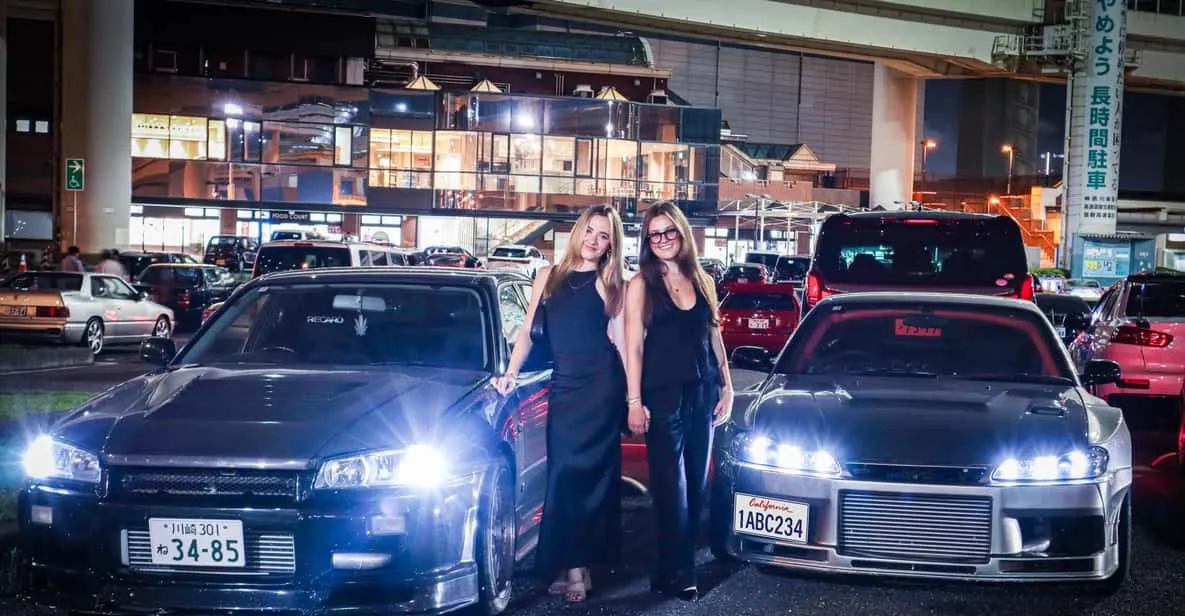
 Tokyo Drift Car-Meet Ride with the Local Street Team
Meet real members of Tokyo's street-car community and ride in genuine modified machines like a Skyline R34, Nissan Silvia, or Toyota Supra. The night runs along the bayside…
- Ride with active members of a local Tokyo car crew
- Choose from real modified cars such as an R34, Silvia, or Supra
- Night expressway run out to the Daikoku PA meet
- Swap between cars when the group allows it
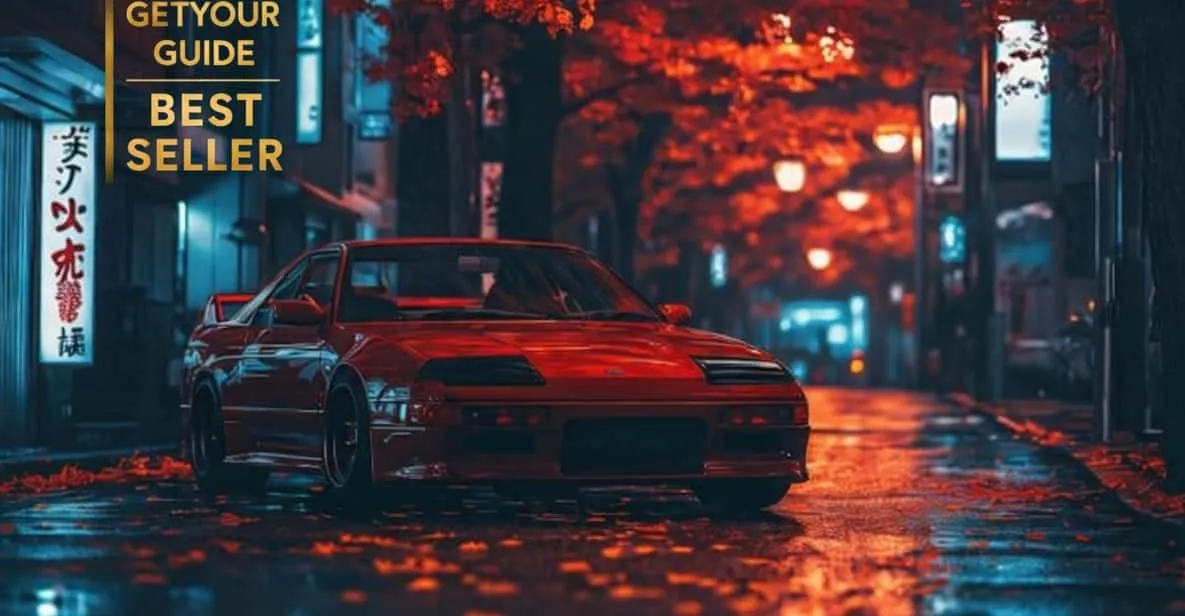 from $103Hotel Pickup
 Private JDM Convoy to Daikoku PA with Hotel Pickup
A private tour that collects you from your hotel and joins a convoy of modified cars heading to Daikoku PA or the Umihotaru rest stop over the bay…
- Private ride, not shared with other travelers
- Convenient pickup from your Tokyo hotel
- Join a convoy of modified cars to Daikoku PA
- Option to head to the Umihotaru rest stop over Tokyo Bay
Is Daikoku PA Legal: Frequently Asked Questions
Why did police close Daikoku PA before I arrived?
Most likely crowd control rather than anything to do with legality. On busy Friday and Saturday nights, closures can start as early as 19:00, well before the lot would normally reach its biggest crowd, and there's no posted schedule for when the gate reopens. It has nothing to do with whether visiting is allowed.
What happens if a car fails inspection at Daikoku?
During the documented sweep, officers stopped 53 sports cars and issued fines to 43 of them for illegal modifications under Japan's shaken roadworthiness rules. That risk sits with the car's driver and owner, not with passengers, and it applies to non-road-legal exhausts, ride height and lighting, not to simply being parked in the lot.
Do I need a modified car to visit legally?
No. Anyone can walk up from a parked car, a taxi or a tour vehicle and spend time in the lot; nothing about spectating requires you to own or arrive in a modified car.
Can tourists get in trouble just for being at Daikoku PA?
Not for standing in the lot. The trouble tourists run into is almost always about how they got there: walking or cycling in along the expressway shoulder is prohibited and enforced, which is a different issue from the legality of the meet itself.
Which backup meet spot do tours use if Daikoku is closed?
Most commonly Tatsumi PA No. 1 or Umihotaru PA on the Aqua-Line, with Shibaura PA as a third option now that it shares Daikoku's patrol list. All three run the same kind of free, static car meet.
Do you need a permit, ticket or reservation to be there?
No. Daikoku PA is a public rest stop with no gate and no fee. The only thing you book in advance, if anything, is a seat on a tour that drives you in and already knows the current status of the lot.
Daikoku PA earns its reputation from what shows up there, not from any legal cloud over the lot itself. Visiting to look, photograph and talk cars costs nothing and breaks no rule; the closures and fines in the news are aimed at drivers pushing modifications past the legal line, and at anyone still trying to walk in along the expressway shoulder. Time your visit around the best night to go, let someone else handle the driving, and Daikoku is exactly as legal and as laid-back as the crowd standing around the cars makes it look.
Compare the full range of ways to ride in with a guided night run and pick the one that matches your night.