Best Time to Visit the Daikoku PA Car Meet (2026)
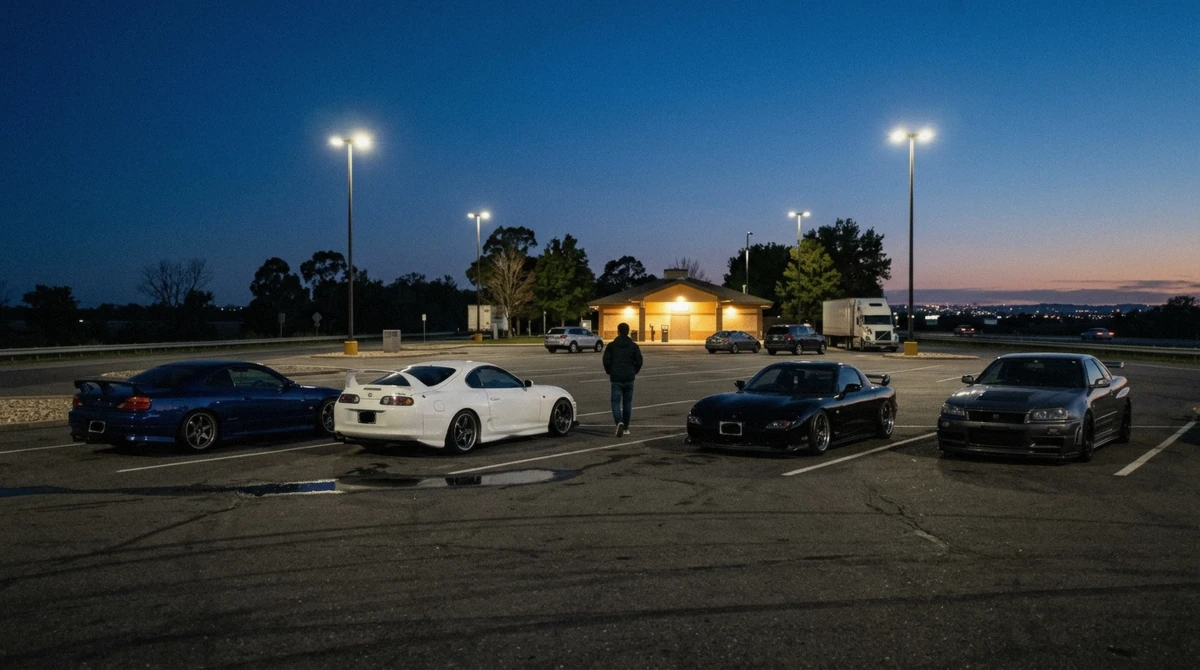
Friday and Saturday nights are the best time to visit the Daikoku PA car meet, when cars start filling the lot from around 17:00 and the deepest crowd usually builds between 21:00 and 01:00. Weeknights run far quieter but are rarely empty, and the calendar month matters less than the day of the week, though summer's warm nights and shorter waits between drop-offs still make it the easiest season to plan around. As of August 2026, that weekly rhythm holds steadier than any seasonal pattern, which is the opposite of how most destinations work.
Quick answer
The best time to visit Daikoku PA is Friday or Saturday night, with cars arriving from around 17:00 and the deepest crowd building between 21:00 and 01:00. Weeknights are far quieter, and any night can end early if police close the lot, which now happens as early as 19:00 to 20:00 on the busiest evenings.
Key takeaways
- Friday and Saturday are the peak nights; cars start gathering from 17:00
- The deep-night window runs roughly 21:00 to 01:00, some sources say 22:00 to 02:00
- Police have closed the lot early, around 19:00–20:00, on busy weekend evenings, see police closures explained
- Weeknights are quieter but not empty; a night highway run still runs nightly
- August averages 27.6°C by day, January 6.4°C, both with cooler bay-wind nights
- September and October are the wettest months at around 240 mm of rain each
Seasons at a Glance
Read the Verdict column below as a quick gut-check, not a strict rule; every month can turn up a surprisingly full lot or a surprisingly quiet one, since the meet has no organizer and no schedule.
| Month | Conditions | Weather | Crowds | Verdict |
|---|---|---|---|---|
| January | Cold, clear bay air | 6.4°C avg, 65mm rain | Moderate | Cold but clear |
| February | Coldest stretch easing | 7.0°C avg, 65mm rain | Moderate | Still cold, quieter |
| March | Warming, breezier | 10.0°C avg, 140mm rain | Moderate | Transitional |
| April | Mild, comfortable evenings | 14.8°C avg, 145mm rain | Moderate–High | Good all-round |
| May | Warm, low humidity | 19.3°C avg, 155mm rain | High | Strong pick |
| June | Rainy season begins | 22.3°C avg, 190mm rain | Moderate | Rain risk rising |
| July | Hot, humid, rain tapering | 26.2°C avg, 185mm rain | High | Warm nights, good crowds |
| August | Hottest month | 27.6°C avg, 140mm rain | High | Best overall |
| September | Wettest month | 24.2°C avg, 240 mm rain | Moderate | Typhoon-season caution |
| October | Cooling, still wet | 18.8°C avg, 240 mm rain | Moderate | Rain risk stays high |
| November | Cool, drier again | 13.6°C avg, 110mm rain | Moderate | Good value |
| December | Cold, clear | 8.8°C avg, 65mm rain | Moderate | Clear but cold nights |
Yokohama's daytime highs and nighttime meet temperatures diverge; the meet itself runs roughly 5 to 8°C below the daytime max on the table above, and the bay wind at Daikoku Futo makes winter nights feel colder still.
| Month | High | Low | Rain |
|---|---|---|---|
| January | 10.2°C | 2.7°C | 65mm |
| February | 10.8°C | 3.1°C | 65mm |
| March | 14.0°C | 6.0°C | 140mm |
| April | 18.9°C | 10.7°C | 145mm |
| May | 23.1°C | 15.5°C | 155mm |
| June | 25.5°C | 19.1°C | 190mm |
| July | 29.4°C | 22.9°C | 185mm |
| August | 31.0°C | 24.3°C | 140mm |
| September | 27.3°C | 21.0°C | 240 mm |
| October | 22.0°C | 15.7°C | 240 mm |
| November | 17.1°C | 10.1°C | 110mm |
| December | 12.5°C | 5.2°C | 65mm |
August is the hottest month at a 31.0°C high, January and February the coldest at lows near 2.7 to 3.1°C, and September and October are the wettest at 240 mm each. Figures are typical normals from climatestotravel.com, based on Japan Meteorological Agency data for 1991–2020; check the current forecast close to your dates.
Best Season by Traveler Type
If you want the fullest possible lot
go on a Friday or Saturday in July or August, when warm nights pull the biggest crowd
If you're chasing the calmest, coolest photo conditions
aim for late April or November, mild temperatures with lighter rain risk
If you're a first-timer worried about a wash-out
avoid September and October, the wettest months at 240 mm each
If you're on a tight budget and flexible on crowd size
go on a winter weeknight; tours run nightly and prices don't spike by season
If you only have one evening free, regardless of month
prioritize Friday or Saturday over any specific month, since the weekly rhythm matters more than the season
Friday and Saturday: The Peak and the Early-Closure Risk
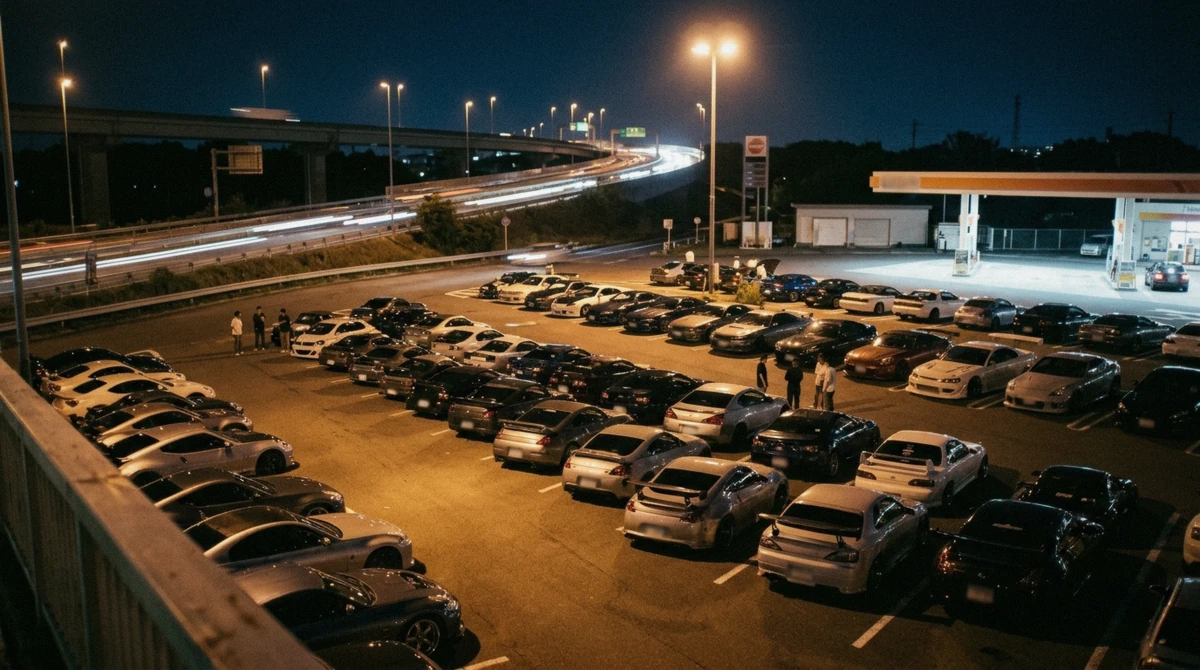
Friday and Saturday nights are the classic peak at Daikoku PA. Cars begin arriving from roughly 17:00 as the workweek ends, and the crowd keeps building through the evening, with most sources putting the deepest window at 21:00 to 01:00, though some describe the peak stretching as late as 22:00 to 02:00. There's no promoter and no guest list; the lot fills because word spreads that cars are already there.
The complication is a real one: since 2025, police have started closing the PA to visitors early on some Friday and Saturday evenings, sometimes as early as 19:00 to 20:00, well before the deep-night crowd would normally peak. These closures are unannounced, so there's no schedule to check ahead of time. A documented enforcement operation stopped 53 modified cars inside Daikoku PA for a spontaneous roadworthiness check, and 43 were fined for illegal modifications, a reminder that the meet operates in a genuine legal grey zone rather than as a sanctioned event. For the full rules and what an early closure means for your night, see police closures explained.
The Hour-by-Hour Build on a Peak Night
A typical Friday or Saturday, when the lot isn't closed early.
-
17:00
First cars arrive
The earliest builds start rolling in as the workweek wraps up, claiming the best-lit rows.
-
19:00
Closure risk window opens
Some nights, police close the lot to new arrivals starting around now; there's no way to know in advance.
-
21:00
Crowd builds fast
If the lot stays open, this is when the density picks up noticeably, with more variety in builds showing up.
-
22:00–01:00
Deep-night peak
The busiest stretch most nights, when the lot is closest to full and the photo opportunities are richest.
-
01:00–02:00
Crowd thins
Cars start peeling off toward home or a second stop; a good time to walk the remaining rows without a crowd.
Month-by-Month at the Meet
Season shifts the comfort of standing around Daikoku for an hour more than it shifts whether cars show up at all. Summer nights (June through August) stay warm enough to linger without a jacket, even with the bay wind, and the rainy stretch from June into early July doesn't stop the meet outright, just thins it on the wettest evenings. Winter (December through February) is when the bay wind bites hardest, and while the lot still fills on weekends, fewer people linger outside their cars for long. Spring and autumn split the difference, with April and May offering the most comfortable combination of mild temperatures and lower rain odds, while September and October carry the highest rain risk of the year at 240 mm each, occasionally compounded by typhoon activity moving through the region.
What doesn't change month to month is the weekly rhythm itself. Whether it's a mild May Saturday or a cold January one, the same Friday-and-Saturday pattern holds, which is why the day of the week deserves more weight in your planning than the season does, unless you're specifically chasing comfortable standing weather or trying to dodge the wettest weeks of the year.
Winter vs. Summer Nights
Summer wins on comfort and staying power; a July or August night rarely drops below 22 to 24°C even after the sun goes down, so standing around the lot for an hour or two doesn't require much more than a light layer. Winter nights swing the other way, with January and February lows near 2.7 to 3.1°C made colder by the open bay wind at Daikoku Futo, enough that most visitors don't linger as long between the car and the A-PIT store's warmth. Neither season stops the meet from happening, but summer is the easier season to plan a comfortable night around, especially for a first visit.
Rain and What Thins the Lot
Light rain rarely keeps builds away; plenty of regulars treat a drizzle as background noise. Heavy rain is a different story, and meets visibly thin out once real rain sets in, since owners of expensive, freshly detailed cars would rather stay home than risk road spray and standing water. September and October carry the highest rain risk of the year on the table above, which is the practical reason those months rank lower here even though temperatures are still comfortable.
What If the Weather Turns?
A forecast calling for heavy rain on your one planned night is a real reason to move the date if you can, since a washed-out lot delivers a genuinely thin experience. Free cancellation on the tours featured here means a bad-weather call costs nothing to reschedule, and most operators are happy to shift a booking a day or two if the forecast turns. For the full breakdown of cancellation norms and what a rained-out night actually looks like, see what happens if your tour is cancelled for weather.
Tours That Run Well on a Peak Night
Two options built around the Friday and Saturday rhythm above.
 from $125
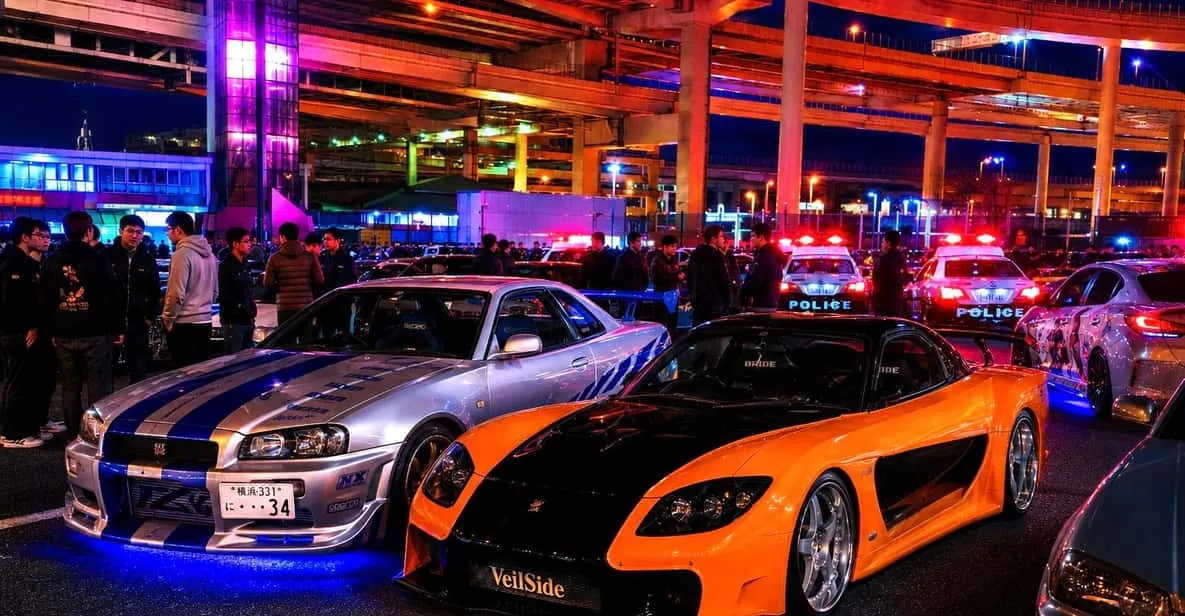
 JDM Night Highway Run to Daikoku PA
An after-dark drive along Tokyo's expressways that takes in Tokyo Tower, the Rainbow Bridge, and the Daikoku Parking Area car meet. The route also stops at the A-PIT…
- Night expressway drive through Tokyo in a sports car
- See Tokyo Tower and cross the Rainbow Bridge
- Reach the Daikoku PA car meet at its busiest hours
- Stop at the A-PIT Autobacs tuning store
 from $103Hotel Pickup
 Private JDM Convoy to Daikoku PA with Hotel Pickup
A private tour that collects you from your hotel and joins a convoy of modified cars heading to Daikoku PA or the Umihotaru rest stop over the bay…
- Private ride, not shared with other travelers
- Convenient pickup from your Tokyo hotel
- Join a convoy of modified cars to Daikoku PA
- Option to head to the Umihotaru rest stop over Tokyo Bay
So, When Should You Go?
Friday or Saturday night is the best time to visit Daikoku PA, with the deepest crowd typically building between 21:00 and 01:00, and summer months add the comfort of warm air for standing around the lot. April, May and November are the budget-conscious runner-up windows, with milder weather and lower rain odds than the peak summer stretch. September and October are the month to avoid if a full, dry lot matters most to your one night out, since they carry the year's highest rain risk at 240 mm each.
Best Time FAQ
What day of the week is the Daikoku car meet?
Friday and Saturday are the classic peak nights, though the meet happens nightly since there's no fixed schedule or organizer.
What time do cars arrive at Daikoku PA?
Cars begin gathering from around 17:00 on peak nights, with the crowd building steadily until the deep-night window of roughly 21:00 to 01:00.
Is Daikoku PA busy on weeknights?
It's far quieter than a Friday or Saturday, but rarely empty. Tours run nightly, and a weeknight can still turn up a handful of notable builds.
What happens if it rains on the night?
Light rain usually doesn't stop the meet, but heavy rain thins the lot noticeably, since owners tend to keep freshly detailed cars off wet roads. Free cancellation covers a genuinely bad forecast.
Is winter or summer better for the Daikoku meet?
Summer is more comfortable for standing around, with nights rarely dropping below the low-20s°C even after dark. Winter lows near 2.7 to 3.1°C, sharpened by the bay wind, make for a colder wait, though the meet still runs.
Are the shop and toilets open late at Daikoku PA?
Yes. As a working rest stop, the shop and toilets at Daikoku PA stay open 24/7, regardless of what time the car meet itself peaks or thins.
I've stood in that lot on a freezing January Tuesday with maybe fifteen cars and on a packed August Saturday where I could barely walk the rows, and both nights had their own appeal. If you only get one shot at it, weight the day of the week over the calendar month, and if you want every Daikoku PA ride compared by season and price before you commit a night to it, the full lineup is worth a look.