What to Expect at a Daikoku PA Car Meet: A Night, Hour by Hour
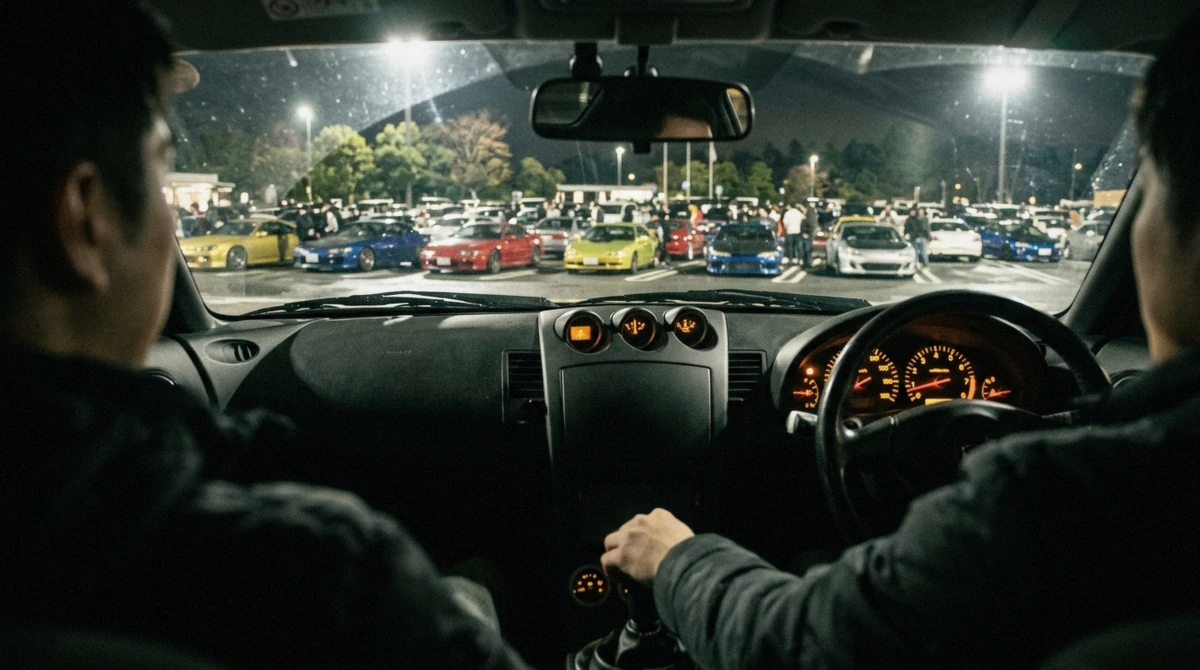
What to expect at a Daikoku PA car meet is less spectacle and more a slow, floodlit walk through rows of parked cars that people happen to have built themselves. You don't need any experience with cars or Tokyo to enjoy it; the first time I rode out I expected something closer to a street race and got a calm, sociable parking lot instead, which turned out to be the better version. This is the night laid out hour by hour: the drive out, what the lot itself feels like, what actually shows up depending on the night, and the small first-timer surprises nobody mentions beforehand.
Quick answer
A Daikoku PA night is a drive out over the Rainbow Bridge, roughly an hour walking the lot among modified JDM and European cars, and a stop at Tokyo's largest tuning store before heading back. Nothing is staged and no sighting of a specific car is ever guaranteed, but a GT-R, an RX-7, a Supra, an NSX or a Silvia turns up on most nights someone actually goes looking.
Key takeaways
- Most tours spend about an hour at the meet itself, bookended by an expressway drive that is part of the show.
- Expect JDM icons like a GT-R, RX-7, Supra, NSX or Silvia, though which exact cars show up varies night to night.
- The A-PIT Autobacs stop, Tokyo's largest tuning store, runs 9:00 to 21:00 and only fits on tours that start before closing.
- The route itself strings together the bay's JDM night spots: Tokyo Tower, the Rainbow Bridge and the Wangan
- Photos are welcome, but ask before shooting an interior or touching a car; if you want the GT-R of your chosen generation, that's a specific booking, not a lucky find.
- First-timers are usually surprised by how quiet and orderly the lot is compared with what videos suggest.
How a Tour Night Flows: Pickup to Drop-off
Every operator runs the details slightly differently, but the shape of the night is consistent across the tours on this site.
-
Meeting point
Pickup in central Tokyo or your hotel
You gather at a meeting point in an area like Shibuya, or a private tour collects you directly from your hotel. Either way, the guide runs a short briefing on the route and the etiquette expected once you're at the meet.
-
First 30-40 minutes
Onto the expressway
The car merges onto the Shuto Expressway and the city thins out behind you. This stretch is not filler; the elevated road, the passing skyline and the run toward the bay are part of what people book the tour for.
-
Mid-drive
Rainbow Bridge and Tokyo Tower
Most routes cross the Rainbow Bridge with the bay opening up on both sides, and many also swing past Tokyo Tower for a lit-up photo moment before turning toward Yokohama.
-
Roughly one hour
The meet itself
You arrive at Daikoku PA and have about an hour to walk the rows, talk to owners who are open to it, and take photos. This is the unstructured core of the night; nobody hurries you through it.
-
30 minutes, tours starting early enough
The A-PIT Autobacs stop
A stop at Tokyo's largest tuning and parts store, open 9:00 to 21:00, rounds out the automotive side of the night for anyone who wants to browse parts or wheels.
-
Final stretch
Drop-off
The drive back retraces the expressway route to your starting point or hotel, usually a quieter, more relaxed ride than the drive out.
The Route Landmarks: Rainbow Bridge, Tokyo Tower, Wangan and C1
The drive to Daikoku PA is not just transit time between two points; the route itself is a fixture of the Tokyo car scene. The Wangan, officially the Bayshore Route, is the expressway that gave Japan's high-speed touge and top-end car culture its name, and running even a stretch of it after dark is part of what a night like this is actually selling. Several tours also loop through the C1 Inner Circular, a roughly 15-kilometer ring road through the heart of the city, before heading out toward the bay.
The Rainbow Bridge is the visual centerpiece of most routes: a suspension bridge lit white, then rotating through color displays some nights, that carries the expressway across Tokyo Bay with the city skyline receding behind you. Tokyo Tower, the older and smaller of Tokyo's two towers but still the more photogenic at night with its orange lattice lighting, appears on most itineraries as a brief photo stop or a drive-by rather than a full visit. Together, the bridge and the tower are why a lot of riders say the drive out was as memorable as the meet itself.
The Lot Itself: What You Walk Into
Daikoku PA looks, at first glance, like exactly what it is: a large expressway service area with a convenience store, restrooms and rows of parking bays. What makes it different is what fills those bays after dark. Cars arrive in loose waves rather than all at once, park in informal clusters by make, model or crew, and owners pop their hoods, trunks or doors for anyone genuinely interested in looking.
There's no stage, no announcer and no schedule of events; the meet is the parking lot itself, and the only structure is whatever the crowd creates on a given night.
The atmosphere is more low-key than the videos suggest. Music plays from a car stereo here and there, small groups stand and talk, and the loudest moments are usually an engine starting up to reposition, not a burnout or a race. Lighting comes from the parking area's own floodlights plus each car's own setup, which is part of why photos from Daikoku have such a distinct look.
Weeknights run thinner and calmer; weekend nights, especially before any early closure, are when the lot fills closest to capacity.
Cars by Night Type: What Shows Up When
No two nights at Daikoku look the same, and no tour or website can promise a specific car will be there. What varies more predictably is the general mix, based on the day of the week and the crowd it draws.
| Night type | Typical crowd | What you're more likely to see |
|---|---|---|
| Friday and Saturday, peak hours | Largest crowd of the week, builds through the evening | The widest spread: GT-Rs, RX-7s, Supras, NSXs, Silvias and one-off builds |
| Weeknight | Far quieter, but rarely empty | A smaller, more local crowd of regulars and daily-driven builds |
| Rainy night | Noticeably thinner turnout | Fewer cars overall; the ones that do show up are often the most dedicated owners |
| Early in a peak-night closure window | Lot may already be turning cars away | Little to nothing if you arrive after roughly 19:00 and the gate is shut |
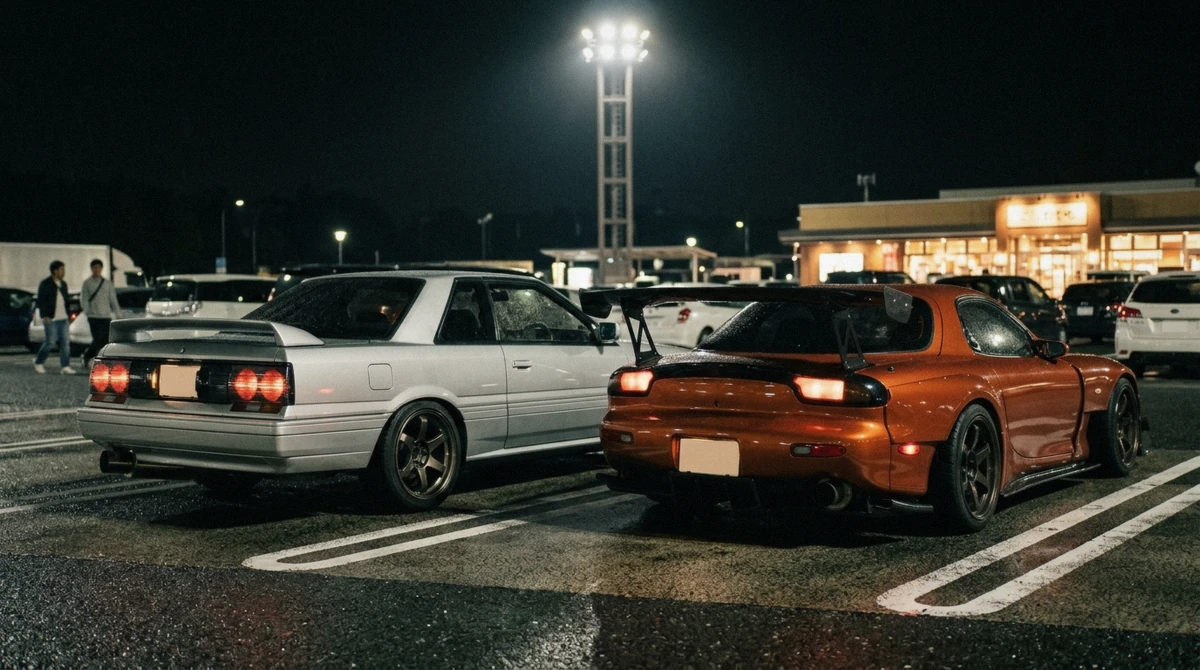
Across all of those, the JDM icons that define Daikoku's reputation, the Nissan GT-R in its various Skyline generations, the Mazda RX-7, the Toyota Supra, the Honda NSX and the Nissan Silvia, are the cars most tours and most visitors come specifically hoping to see. They turn up regularly, especially on weekend nights, but never on a guaranteed schedule; a tour built around one specific car, like the Nissan GT-R experience in Tokyo, solves that by putting you in the car itself rather than hoping to spot one.
The A-PIT Autobacs Stop
Most tours build in a stop at A-PIT Autobacs Shinonome, at 2-7-20 Shinonome in Koto City, which is Tokyo's largest car parts and tuning store. It's open daily from 9:00 to 21:00, and the tour stop generally runs about 30 minutes, enough time to browse wheels, aero parts and accessories or just soak in a slice of Japan's tuning retail culture that most visitors never see. The catch is timing: because the store closes at 21:00, this stop only works on tours that start early enough in the evening to reach it before closing, so a very late departure may skip it entirely in favor of more time at the meet itself.
For anyone who cares about parts and tuning culture as much as the cars themselves, A-PIT is worth treating as a highlight rather than a filler stop. The shelves stock everything from daily maintenance items to serious performance parts, and browsing it alongside a guide who can explain what a given part actually does adds a layer that a solo visit to Daikoku wouldn't include on its own.
Photography at the Meet
Cameras and phones are everywhere at Daikoku and nobody minds a reasonable amount of shooting; it's a large part of why people go. The one rule that matters is to ask before you get personal with someone else's car: a wide shot of a row of cars needs no permission, but leaning in for an interior shot, opening a door, or touching bodywork for a closer angle is the owner's call, not yours. Most owners are happy to say yes if you simply ask, and a lot of the friendliest interactions at Daikoku start exactly that way.
The floodlit lighting that makes Daikoku photos distinctive is also unforgiving on a phone camera; a wider aperture setting or a dedicated camera with a fast lens handles the mixed light and reflections noticeably better than an auto phone shot. Tripods are impractical in a crowded lot, so a camera that performs handheld in low light, or simply steadying your phone against a rail or your own body, gets better results than trying to brace for a long exposure.
First-Timer Notes: What Surprises People
A few things about a first Daikoku night catch people off guard, in a good way. The quiet is the biggest one: after seeing drift and burnout clips online, most first-timers expect noise and chaos and instead find a genuinely calm lot where the loudest sound is conversation. The scale surprises people too, since Daikoku is a working expressway rest stop, not a purpose-built venue, so the meet unfolds across ordinary parking bays rather than a dedicated show ground.
- How approachable owners are once you ask before touching or photographing up close
- How much of the experience is the drive itself, not just the hour in the lot
- How quickly an hour at the meet passes once you start actually talking to people
- How normal and unremarkable a modified GT-R or RX-7 looks to the regulars, even though it's the highlight of your night
- How dependent the whole plan is on the night: a Friday feels completely different from a rainy Tuesday
Getting there under your own steam is its own separate learning curve, since the lot has no train station or pedestrian entrance; how people actually get in is worth reading before you plan anything independently. If you're weighing whether the whole night is worth booking in the first place, is a Daikoku tour worth it walks through the honest tradeoffs, and when the lot is fullest covers which night of the week actually delivers the busiest scene.
Which Tour Matches What You Want to See
This is a night built more around atmosphere and slow looking than spectacle, and knowing that ahead of time is most of what makes a first visit land well. Ride the bridge, walk the rows, ask before you get close to a car, and give the hour at Daikoku the same unhurried pace the regulars do. If you want a specific car locked in rather than left to chance, browse the cheapest Daikoku rides or the night highway drive guide to see which fits your night, or start from the full Daikoku PA lineup and compare every option side by side.
What to Expect at Daikoku PA: Frequently Asked Questions
How long do you actually stay at Daikoku PA on a tour?
Most tours give you about an hour at the meet itself, inside a total trip of roughly three to four hours once the drive out, any A-PIT stop and the drive back are included.
Will there definitely be a GT-R or RX-7 there when I visit?
No sighting is ever guaranteed at an open meet like this. GT-Rs, RX-7s, Supras, NSXs and Silvias show up regularly, especially on weekend nights, but if you want a specific car for certain, the tours that put you inside one, rather than hoping to spot one, are the reliable option.
Is the A-PIT Autobacs stop included on every tour?
Only on tours that start early enough in the evening, since the store closes at 21:00. Later departures may skip it in favor of more time at Daikoku PA.
Can I take photos and videos at the meet?
Yes, photography is a normal part of the night. The only rule is to ask before shooting an interior or touching a car; wide shots of the lot need no permission.
Is a weeknight visit worth it if I can't make a weekend?
Yes, though the crowd will be noticeably smaller. Weeknights are quieter and more local, with fewer cars overall but still a genuine slice of the scene, and none of the early-closure risk that can hit peak Friday and Saturday nights.
Do I need to speak Japanese to talk to owners at the meet?
No. Basic friendliness and asking before you touch or photograph a car go a long way regardless of language, and tour guides are generally happy to help translate if a conversation gets going.